Origins of banknotes
The earliest forms of banknotes were not official currency, yet they clearly served a practical purpose. Merchants in China during the Tang and Song dynasties used paper instruments to spare themselves the burden of transporting large quantities of heavy coinage. These notes represented deposits of coins held elsewhere. They were promises rather than money itself, used and accepted as if they carried value.
Europe arrived at similar ideas much later. Goldsmiths and private banks issued paper receipts acknowledging stored gold or silver. Over time, these receipts began to circulate from hand to hand. In this early phase, they remained promissory notes in a technical sense. Their usefulness depended entirely on confidence that the issuer would honour them quickly. Without that confidence, the paper lost all value.
Governments initially viewed banknotes with caution. Minted coins carried intrinsic worth through precious metals and were considered sound money. Paper, by contrast, had no value in itself. Convincing people to accept banknotes required a significant cultural shift, one that unfolded gradually and not without resistance.
Early banknote design
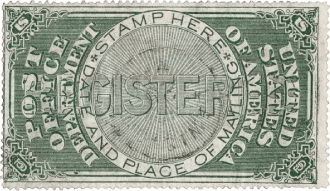
Early banknote design was practical rather than artistic. Legibility and identification of the issuer came first. Text dominated the layout. Decorative features were minimal and often inconsistent. Each note needed to state its value clearly and show who stood behind it.
As circulation expanded, designs became more elaborate. Borders, symbols, and signatures were added to discourage copying. In some regions, handwritten elements remained part of the design for many years. Serial numbers and official seals helped establish legitimacy, even though such features would be easy to replicate by modern standards.
There was also a political element at work. Rulers and governments used imagery to reinforce authority. Portraits, coats of arms, and allegorical figures reminded holders that the note carried official backing. Design became a subtle form of communication as well as a functional requirement.
Trust as the foundation of paper money

Trust sits at the centre of the history of banknotes. Without it, paper currency simply does not work. Early failures of banknote systems often followed over-issuance, where more notes circulated than reserves could support. Inflation and panic followed, sometimes with severe consequences.
To establish confidence, issuing authorities relied on consistency. Notes had to look the same each time they were issued. Their stated values had to be honoured. Legal frameworks reinforced acceptance by requiring banknotes to be accepted for taxes and debts. Gradually, value came to be understood as something agreed collectively, rather than something tied directly to metal content.
Some would argue this shift was as much psychological as economic. Accepting banknotes meant placing faith in institutions, an idea that continues to be tested during financial crises centuries later.
Security development over time
Counterfeiting appeared almost as soon as paper money did. Wherever banknotes circulated, attempts to copy them followed. Early forgeries were crude, but legitimate notes were often no better. This pushed rapid advances in printing methods.
Engraving replaced simple printing, allowing for finer lines and more intricate detail. Watermarks were introduced as embedded identifiers visible when held up to the light. Specialised inks and paper formulas followed. Each development raised the skill and cost required to counterfeit notes, though none removed the problem entirely. By the nineteenth century, security had become a defining aspect of banknote design rather than a secondary concern.
The arms race with counterfeiters
Every improvement in security encouraged new counterfeiting techniques. This cycle continues today. Periods of instability have historically seen sharp increases in forgery. War, rapid inflation, and political upheaval created conditions where counterfeit notes could circulate with less scrutiny.
Material evolution in banknotes
The materials used in banknotes evolved alongside their design. Early notes were printed on rag-based paper made from cotton or linen fibres. These materials were durable and absorbed ink well. Wood pulp paper emerged later but proved less suitable due to faster wear.
As circulation increased, durability became more important. Notes had to withstand folding, moisture, and constant handling. Cotton-based paper remained common for centuries. In more recent decades, some countries have moved towards polymer notes, which last longer and allow for new security features, though not without debate.
Material choice also shaped public perception. A flimsy note suggested fragility and risk, while a sturdy one implied permanence. Even today, the feel of a banknote influences how people judge its authenticity.
Size and usability considerations
Early banknotes varied widely in size. Some were large and awkward, intended more for storage than daily use. Others were small and easily misplaced. Standardisation took time. As economies developed, usability became more important. Notes needed to fit wallets, tills, and counting machines. Different denominations were often produced in varying sizes to aid recognition. This reduced errors and improved accessibility, particularly for those handling cash regularly.
Visual clarity also mattered. Colour differences helped distinguish denominations. Fonts became clearer. Layouts increasingly favoured quick recognition over decorative excess.
Banknotes in the modern historical phase
The twentieth century marked a turning point. Central banks consolidated control over currency issuance. Design committees replaced improvised decisions. Banknotes became standardised national symbols.

Modern notes reflect multiple priorities. They must resist counterfeiting, survive prolonged circulation, convey authority, and remain familiar to the public. Portraits of historical figures and landmarks reinforce national identity, while advanced security features operate quietly in the background.
Despite the rise of digital payments, banknotes persist. Predictions of their disappearance have surfaced for decades. Cash remains trusted during power cuts, emergencies, and periods of uncertainty. Its physical presence offers reassurance that electronic systems sometimes cannot.
Design as cultural record
Modern banknotes also function as historical records. They reflect the values, figures, and design trends of their time. Changes in imagery often mirror wider social shifts, including the recognition of people previously overlooked.
The enduring role of trust
Throughout history, the success or failure of banknotes has depended on trust. Design, materials, and security measures support that foundation, but they cannot replace it. When institutions falter, paper money suffers regardless of technology.
There is something revealing about how easily a banknote passes between strangers. No contract is signed. No explanation is required. Value is accepted on sight. That unspoken agreement reflects centuries of experimentation, missteps, and adaptation. Banknotes continue to evolve. Their future may involve fewer pockets and more collectors, but their story remains closely tied to human behaviour. In the end, banknotes have always been about more than paper. They are about belief, authority, and shared acceptance.